


The Seattle Times
4.11.69K Reviews
App Specs
- Version
- 7.2.1
- Updated On
- License
- Free
- Downloads
- 100,000+
- Developer
- The Seattle Times
- Categories
- News & Magazines
- Platform
- Android
Screenshots
 Analysis by AppCompare
If you follow Seattle and the Pacific Northwest, a local newspaper app can be useful for more than checking headlines: it gives regional reporting a place beside the national stories competing for your attention. I find that focus is the main reason to consider The Seattle Times. It is a free news and magazines app from The Seattle Times, and its strongest appeal is to readers who want local coverage in their regular news routine rather than another broad feed with little connection to the region.
That regional focus is also a sensible way to judge whether the app fits. Someone who lives in Seattle, has family there, follows Northwest sports or business, or simply wants a closer view of the area may get more from it than from a national headline aggregator. If you mainly want international breaking news, a general news app may be a better daily starting point, with this one serving as a local supplement.
Trust starts with the source and the choices you can see
The publisher matters to the experience: this is an app from the newspaper itself, not a third-party collection of headlines. That gives the coverage a clear editorial home, though it does not mean every reader will agree with every article or opinion. I would treat the app as one useful source, read stories with attention to whether they are reporting or commentary, and compare consequential claims with other reputable coverage when needed.
When I assess a news app’s trustworthiness, I separate the quality of its journalism from what I can actually control inside the product. Visible choices—such as whether to enable alerts, whether to save a story, and whether to use the digital edition—shape how I interact with it. Those choices are useful, but they should not be mistaken for a complete account of an app’s data practices or permissions. I would review the privacy and permission information presented on the device and in the app before deciding how much personal information to share.
First Impressions
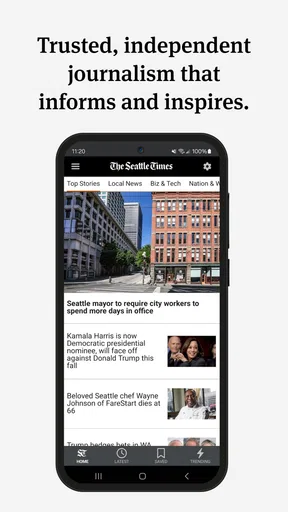
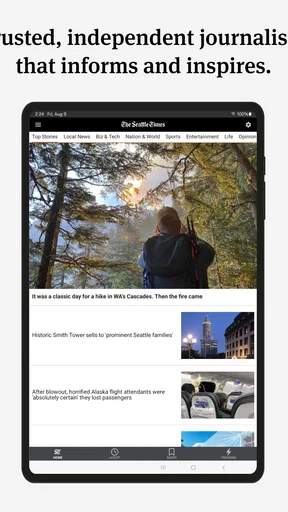
After installing the app, the first thing I noticed was its clean and intuitive design. You know how some news apps are just cluttered messes? Well, The Seattle Times is the opposite. The layout is crisp and easy to navigate, making it a breeze to find what you're looking for. The homepage features the top stories, and with just a quick scroll, you can get a snapshot of the day's biggest news.
User Experience
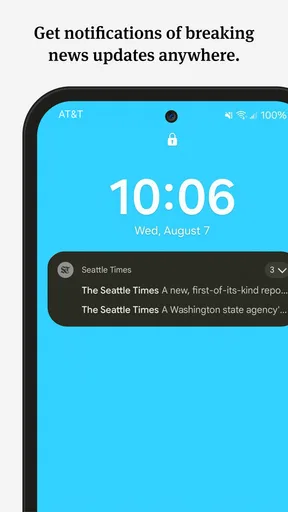
Let's dive into the user experience. The app runs smoothly, and I didn’t experience any lag or crashes, which is a huge plus. One of my favorite features is the ability to customize notifications. I mean, who wants to be bombarded with alerts every five minutes, right? You can choose to get alerts for breaking news, sports updates, or even specific categories you're interested in. This makes it super easy to stay informed without getting overwhelmed.
Another cool aspect is the offline reading feature. Perfect for those times when you're on a plane or somewhere without internet access. Just download the articles you're interested in ahead of time, and you're good to go.
Worth Reading Before You Choose

EA SPORTS FC Mobile 26 Is a Bigger Football Game, but It Takes Time

Flipboard Shows What News Apps Must Do Beyond the Feed

Switching to Android Auto Means Rethinking Your Driving Routine

Google Calendar Makes a Crowded Week Easier to Manage

Ludo King Makes the Most of the Minutes Between Plans

Baby Panda World Brings Quick Play to Modern Phones, but Its Game Library Feels Busy
Making the routines work for you
Those options suit different reading habits, and I would set them up with intention rather than accept every prompt by default. If I only want urgent local developments, I would keep alerts narrow and open the app when I have time for everything else. That reduces interruptions and makes a notification feel more useful. If I follow a particular sport or topic closely, choosing only that kind of alert can make the app feel more personal without turning the phone into a constant news ticker.
Offline reading works best as a small planning habit, not an assumption that every story will be available automatically. Before a commute, flight, or trip through an area with unreliable service, I would open the articles I expect to read and save or download them while connected. That simple step is especially helpful if a story is long enough to finish later. It also avoids the annoyance of discovering that a page will not load when you have already settled in to read.
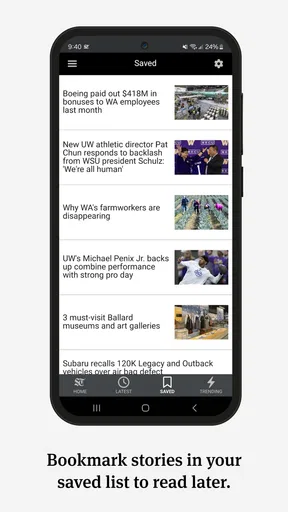
Saved stories can serve a different purpose from offline copies: I use a bookmark as a reminder to return, while an offline download is useful when connection is the immediate concern. If I were building a weekend reading list, I would save pieces as I encountered them during the week, then review the list when I had a quiet stretch. That is more practical than relying on memory or leaving a stack of open browser tabs. Readers should still check how the app presents saved material, since a saved item is not necessarily a permanent archive.
Content Quality
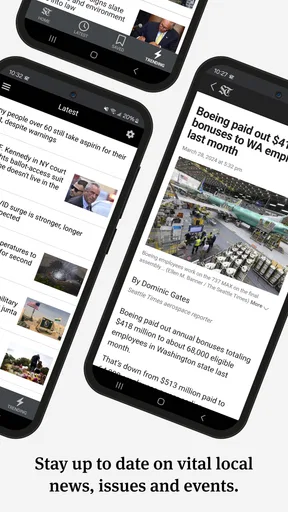
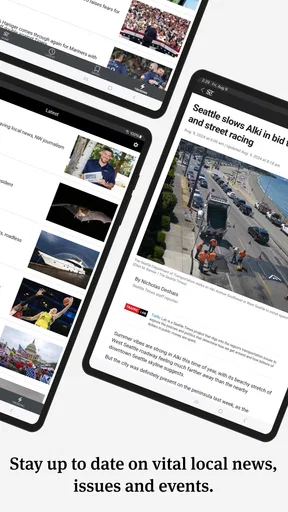
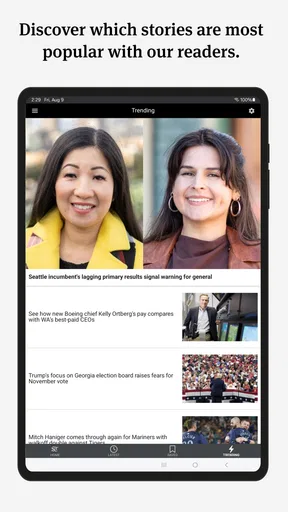
Now, let's talk about the content itself. The reporting is top-notch, with articles that are both informative and engaging. You can tell the journalists really know their stuff. The app offers a mix of local, national, and international news, along with sections dedicated to sports, entertainment, business, and more.
For those who love diving deeper into stories, there are plenty of in-depth investigative reports and opinion pieces. Plus, the photo galleries and videos add a rich, multimedia experience that makes the news come alive.
Choosing it over a general news feed
The difference between a local newspaper app and a general-purpose news aggregator is not simply the number of headlines on screen. A broad feed is often convenient when I want a quick scan across many subjects or publishers. A newspaper app is more useful when I want to follow what is happening in one region and return to reporting from the same newsroom. For a reader trying to understand a local issue over several days, that continuity can be more valuable than another list of unrelated trending stories.
There is a trade-off: a regional emphasis will naturally feel less comprehensive if my interests are mostly elsewhere. I would not replace a global news source with this app if international coverage is my main priority. Instead, I would use it for the Northwest perspective and keep a broader source for developments beyond that beat. That division of labor also makes it easier to notice what each source covers well, rather than expecting one app to be equally strong on every subject.
A realistic routine might be to check the front page over breakfast, read one local story before work, and save a longer investigation for the evening. If a major regional event is unfolding, I could turn on relevant alerts for that period, then narrow them again once the immediate need passes. This approach makes the app a tool I consult on my terms, rather than a stream that dictates when I pay attention.
Features Worth Mentioning
The app also includes some handy features like a weather update section, which is super useful given Seattle's unpredictable weather patterns. You can also access the eNewspaper, which is essentially the digital replica of the print edition. It's perfect for those who enjoy the traditional newspaper layout but want the convenience of reading on a device.
The eNewspaper and article pages serve different moods. I would choose the replica when I want to browse an edition in a familiar newspaper format, perhaps scanning several sections without choosing a single headline first. For focused reading on a phone, individual articles are easier to approach. Neither format is automatically better; the useful question is whether I want to browse broadly or go straight to a particular story.
The weather section can be a quick local reference alongside the news, but I would not treat it as a replacement for a dedicated weather service when I need detailed forecasts or alerts for a specific situation. Its value is convenience: it keeps a basic local check close to the reporting I already opened. That is a modest feature, but it can make the app more useful in a morning routine without changing what the app is primarily for.
One feature I really appreciate is the ability to save articles for later. We all have busy lives, and sometimes you just don’t have time to read an interesting piece right away. With this feature, you can easily bookmark stories and come back to them when you have a moment.
Cost, access, and data-sensitive moments
The app itself is free to install, but in-app purchases are listed at $19.99 per item, and access to some reading may depend on subscription status. The practical point is to distinguish downloading the app from having unlimited access to its journalism. If I expect to read only occasionally, I would first see how far the free access takes me; if I rely on it every day, I would check the subscription options and terms shown in the app before committing. I would not assume that every article or edition is available at no cost.
That distinction also helps answer a common question: can I use it without paying? Yes, the app is free, and some reading is available without a subscription, but the article limit described in the app means a frequent reader may encounter a prompt to subscribe. I would save the pieces I most want to finish rather than tapping through headlines indiscriminately, especially if I am deciding whether the publication’s coverage is worth paying for.
For privacy-conscious readers, the most relevant moments are the ones where the app asks for a choice or where device settings are involved. I would decide separately whether notifications are worth enabling, review any permission request in context, and use the device’s settings to change a choice later if needed. I would not grant access simply because an app requests it; I would first consider whether that access is necessary for the feature I want. These are practical checks, not a claim about any particular data collection practice.
The app is rated for Everyone, which makes its general audience broad, but that label is not a promise that every news story will suit every household or age. Parents may still want to guide younger readers through current events and opinion pieces. For device compatibility, the stated minimum operating-system requirement is version 7.0, so I would check the device’s software before installing rather than assume an older phone will run it.
Room for Improvement
While the app is pretty fantastic, there are a couple of areas that could use a little tweaking. For instance, the search function could be more robust. Sometimes it takes a bit of effort to find older articles. Also, for those who aren’t subscribers, there’s a limit to the number of free articles you can read each month. But hey, quality journalism often comes at a price, right?
Search is the main friction point if I use the app as a reference library. When I remember a subject but not the exact headline, finding an older piece can take more effort than browsing current coverage. A useful workaround is to save an article when I first see it if I know I will want to revisit it; that does not solve discovery after the fact, but it prevents some future searching. If archival research is my central need, I would compare the app’s search experience with other ways of finding the publication’s older reporting before relying on it.
The article limit also changes how I would use the app. A casual reader can sample the coverage, but someone who opens many stories each day may hit the boundary sooner than expected. I would pay attention to that pattern for a while before deciding whether a subscription makes sense. The value depends on how often I read and how much I care about this particular regional reporting, not simply on how polished the interface feels.
Who will get the most from it
I would recommend the app most readily to people who live in or feel connected to the Northwest and want a direct route to local reporting, regional sports, business coverage, and longer investigations. It is also a good fit for former residents who want to keep up with home, or visitors who want more context than a quick search for attractions and weather can provide. The mix of articles and the digital edition gives readers more than one way to approach the same publication.
On the other hand, I would skip it as a primary news source if I want a highly personalized feed assembled from many publishers, if I rarely read Seattle-area coverage, or if I do not want to encounter subscription limits. Someone who only needs an occasional headline may be better served by a broad free news service, while a reader focused on national or global reporting should choose a source built around that scope. The best fit is not universal; it depends on whether the region is important enough to earn a regular place in your reading.
It has been available since April 14, 2011, and the current version is 6.3.2. Its average rating is 4.2 from around 3.9 thousand ratings, with roughly 1.7 thousand written reviews and more than 100 thousand installs. Those figures suggest an established audience, but I would treat them as context rather than proof that the app will suit my habits. My decision would rest more on the quality and relevance of the coverage, the reading experience on my device, and whether the available access works for me.
Final Thoughts
Overall, The Seattle Times app is a must-have for anyone interested in staying updated with news from the Pacific Northwest. It offers an excellent user experience, high-quality content, and features that make it easy to tailor your news consumption to your preferences. Whether you’re sipping coffee in your favorite Seattle café or chilling at home, this app makes it easy to stay in the know.
So, if you’re looking for a reliable and user-friendly way to get your news fix, give The Seattle Times app a try. You won’t regret it!
Pros
- Comprehensive local coverage.
- User-friendly interface.
- Customizable notifications.
- Offline reading available.
- Regularly updated content.
Cons
- Limited international news.
- Ads in free version.
- Occasional loading delays.
- Subscription required for full access.
- No dark mode option.
FAQs for The Seattle Times
What features does The Seattle Times app offer?
The Seattle Times app provides users with access to the latest news, articles, and updates from Seattle and beyond. It includes sections for local, national, and international news, as well as sports, entertainment, and lifestyle. The app also offers personalized notifications, offline reading, and a user-friendly interface for an enhanced reading experience.
Is The Seattle Times app free to use?
The app itself is free to download, but access to certain content may require a subscription. While some articles and news updates are available for free, premium content and in-depth reports typically require a subscription. Users can explore various subscription options for unlimited access to all features and articles.
Can I customize my news feed in The Seattle Times app?
Yes, The Seattle Times app allows users to personalize their news feed. By selecting preferred topics and sections, users can tailor their experience to focus on the news that matters most to them. Notifications can also be customized to ensure users receive updates on breaking news and stories of interest.
Does The Seattle Times app support offline reading?
Absolutely. The Seattle Times app supports offline reading, allowing users to download articles and read them later without an internet connection. This feature is particularly useful for those who want to keep up with the news while on the go or in areas with limited connectivity.
How frequently is the content updated on The Seattle Times app?
The Seattle Times app is updated regularly throughout the day to ensure users have access to the latest news and information. Breaking news and important updates are delivered promptly, keeping users informed of significant developments as they happen. The app strives to provide timely and accurate news coverage.


